


The dCS Purcell is named after Henry Purcell, the English composer, organist, bass, countertenor who was born in 1659 and died in, alas, 1695. It's a digital/digital converter intended for consumer use, as opposed to the less elegantly packaged pro-audio version, the dCS 972, that I reviewed in February 1999. Both devices increase the sample rate and/or word length of the output from linear PCM digital audio sources like CD or DVD up to a maximum sample rate of 192kHz and a word length of 24 bits. According to the extensive documentation, this is achieved by "using extremely powerful and accurate digital interpolation filters, which yield an output signal having negligible levels of distortion."
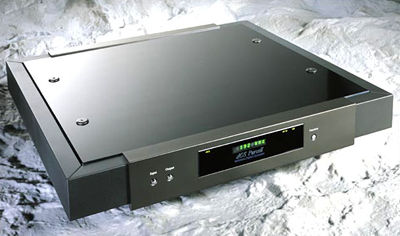
The Purcell is attractively finished in brown and taupe. There are a grand total of three buttons on the front panel: two on the left, one on the right, with the display window between. It was very easy to use—and to place, for that matter, designed as it is to dock below a dCS Elgar or Delius DAC.
The Purcell's latest software upgrade has added downsampling capabilities of 96kHz to 48kHz and 96kHz to 44.1kHz, which allow 24/96 DVD recordings to be copied to CD-R and MD for use in car playback systems and other portable disc players, "where permitted by the copyright owner." The upgrade package also includes downsampling from 48kHz to 44.1kHz for making CD-R copies. And hang in there, vinylphiles—the Purcell Plus is coming to town. It'll feature an analog input to digitize and upsample your precious records! Paging Michael Fremer!
So what, exactly, is the difference between upsampling à la dCS and the industry-standard 8x-oversampling converters that take "Red Book" 16-bit/44.1kHz up to a 352.8kHz datastream before hitting the DACs? That's...hard to answer. As John Atkinson mused in his December "As We See It," it may all be down to a question of the difference between digital filters!
If you're interested in the subject, visit the dCS website and click on "Technical Papers." There you'll find, in PDF format, "Timing Errors and Jitter," "A Suggested Explanation for (Some of) the Audible Differences Between High Sample Rate and Conventional Sample Rate Audio Material," "Resolution, Bits, SNR, and Linearity," and, finally, the long-awaited "Effects in High Sample Rate Audio Material."
You might also want to visit dCS importer Audiophile Systems' website, and download the Purcell's user manual. It contains interesting technical Information about word-length reduction and dither, a process that, distilled to its basics, adds a signal to transform the sonically ugly quantization products due to truncation from a long word length to a shorter one into benign random noise.
For its part, dCS states that "upsampling reveals information that is present in the master source, but which is not audible when the CD is played back normally. Upsampling cannot increase the amount of information in a signal, and the exact mechanism behind the perceived sonic improvements is currently not clear. We are continuing our research into this subject."
So while the true differences between upsampling and oversampling remain murky, my pleasant mission is to report on the sound of the Purcell and compare it to the latest version of the pro-audio version, the 972—and that I shall do forthwith!
Hardware
The Purcell is attractively finished in brown and taupe. There are a grand total of three buttons on the front panel: two on the left, one on the right, with the display window between. It was very easy to use—and to place, for that matter, designed as it is to dock below a dCS Elgar or Delius DAC.
Far left, the Input button makes the same precise relay sounds when pressed as the other two control buttons, and cycles through AES, S/PDIF (RCA), and ST AT&T optical (if installed). The Input button is also used to page backward through the Function Menu if you're not using the remote.
The Output button cycles through the output sample rates: 32, 44.1, 48, 88.2, 96, 176.4, and 192kHz. (The top two are available only when running dual AES connections.) dCS warns that, with most DACs, the system should be muted before changing sample rates, but Elgar and Delius owners can set their inputs to Non Audio Mute and relax. The Output button is used to page forward through the Function Menu when the remote is not used.
Cascading down the display window's left side are bright yellow input indicators, while the main display shows input and output sample rates. Down the right side of the display are indicators for Output word length and Noise Shaping Off. If variable noiseshaping is used, telltales for first-, third-, and ninth-order shaping filters light up when selected.
The last button to the right on the simple and architecturally elegant front panel is the Function button, which allows the user to access additional features. Future enhancements will be released on CD; you'll be able to upload them into the software simply by playing the disc!
The rear panel seems densely packed with connectors, but don't let that put you off—it's dead simple to hook up. You've got several choices for input: S/PDIF on RCA (the one I used) and BNC (there's no BNC S/PDIF output on the Accuphase DP-100 SACD/CD transport), plus AES/EBU on an XLR connector, all capable of passing up to 96kHz sampling rates. Next in line is a serial-type communications port "for future enhancements." You're warned to keep outta there to avoid provoking digital mayhem within. An ST optical port is next, if you've elected that option. (ST is dead in the dust these days. Here it reliably handles signals only up to 48kHz; higher speeds are possible but depend on the quality of the receiver.)
Outputs comprise an RCA for S/PDIF up to 96kHz, with a BNC output next in line, also S/PDIF to 96kHz. Beside them are XLR connectors labeled AES 1 and 2. A single AES/EBU connection handles up to 96kHz, but you can run 88.2, 96, and above using a pair of AES/EBU connectors in dual AES output mode.
While the Function Menu Flow Chart illustrates a full four- by five-row grid detailing each function choice and its settings, the Purcell is far less daunting to use than you might guess from a glance at its extensive documentation. In fact, the factory settings are optimized for most systems right out of the box. If you use a single AES output, the Purcell defaults to 24 bits and 96kHz output. If you slip two AES cables into its outputs, it'll automatically upconvert to 24/192.
The IEC mains socket, fuse assembly, and On/Off switch finish off the back panel. While the Purcell is comprehensively equipped for a number of tasks, all you really need to get the best out of it is a single digital input from a transport (CD or DVD-Audio/Video) and a pair of AES/EBU cables to connect the Purcell (or 972) to the Elgar.
It's a Setup!
While the Function Menu Flow Chart illustrates a full four- by five-row grid detailing each function choice and its settings, the Purcell is far less daunting to use than you might guess from a glance at its extensive documentation. In fact, the factory settings are optimized for most systems right out of the box. If you use a single AES output, the Purcell defaults to 24 bits and 96kHz output. If you slip two AES cables into its outputs, it'll automatically upconvert to 24/192.
The Function Menu cycles through five Output Word Lengths (16-24 bits), Noise Shaping, Dither, Output Mode (Single or dual AES), Filter (1-4), Clone (bit-for-bit in'n'out processing for HDCD), De-Emphasis (Strip, Pass Through, Handle), Display Mode (sampling rate in, out, both), Input Word (number of active bits), Display Brightness, Test, Issue (software version), Serial Number, Contact Information (!), Time Out (Normal, Long), Channel Check (left, then right channel tones), Phase Check (noise in both channels, then inverts that in the right channel), Burn-In (modulated pink noise), Factory (restores default settings), and End, which closes the Function Menu. You make your choices, then let the menu time out, at which point the Purcell reconfigures itself to the new settings.
You don't have to bend over and waggle your fanny while squinting at the display, as it's all handily handled with the remote. This unit "commands" the Elgar Plus, but push the Purcell button and, for the next five seconds, the Purcell's remote functions are at your service. In the end, all you have to do is press the Input button to let it know where the digits are comin' in from, then select a sample rate with the Output button of 32, 44.1, 48, 88.2, 96, 176.4, or 192kHz. Then fire up the transport and tighten your seatbelt!
The output word length should be set to the maximum the associated DAC can accept—in the Elgar's case, a full 24 bits. As I paged through the Purcell's documentation, I was impressed by how much thought has gone into the design. For example, the manual explains that the unit stores two word-length settings: the last used when upsampling and last used when downsampling, both automatically applied when changing between sources. That's followed by a chart that suggests noiseshaping and dither options for various word lengths below 24 bits. Noiseshaping is disabled at the two highest sampling rates, by the way. "It is generally best to leave Noise Shaping set to Auto as this will always give a sensible setting." Well, we do want to be sensible, what?
But for all that, I mostly used the Purcell in its default factory settings, upsampling to 24/192, dual AES, to the Elgar Plus. When playing Chesky and Classic Records two-channel DVD-Video 24/96 material, the Purcell (and the 972) automatically adjust to the higher-resolution input datastream. In such cases I was able to compare straight 24/96 throughput to upsampled 192kHz with a few presses of the Purcell's Output button. For completeness's sake, I switched to the 972 and plugged the 24/96 datastream from the Technics DVD-A10 DVD-A/V player directly into the Elgar Plus as well, avoiding the upsamplers entirely. (The A10 will pass 24/96 off a Chesky or Classic DVD-V from its S/PDIF output, but only 16/44.1 or 16/48kHz from a DVD-A.)
I docked the Purcell under the updated Elgar, as the handsome couple are meant to be run, and used XLO The Limited for all digital connections. The 972 sat close by, which made it easy to switch at will between the 972 and the Purcell: I could whip one input and two output datalinks into either unit and have "functionally equivalent" upsampling with data supplied by the Accuphase DP-100 DVD-A/V transport's S/PDIF RCA output. The 972 is a pro-audio piece o' gear, I thought to myself; it's just a computer. So I tossed the 972 onto a shelf and powered it with thoroughly non-exotic ol' Belden power cord. Footers? Why bother? After all, "The Purcell uses the same digital processing engine running the same DSP code and it is sonically identical to the 972." So it ought to sound the same, right?
Not quite. When I tapped the case of the 972, it resonated, just as you'd expect. So what? Well, at first I couldn't resolve the difference between the 972 and the Purcell—the latter just sounded better. Jitter characteristics? muttered my digital conscience. But when I sandwiched the 972 between a trio of damping feet below and a Shakti Stone on top to physically damp the case, the sound was definitely closer to that of the Purcell. The power cord seemed not to matter so much into the 972, or into the Purcell, for that matter.
That's what I heard—no doubt about it—and clearly. Why it should have been so I can't imagine, unless the additional mass on top and the vibration-absorbent footers mimicked the overall lower resonant signature of the very solidly built Purcell. Less shakin' goin' on, less "mechanical jitter" to muddy the sound? I suppose it's possible...
Even maximized for audiophile needs, the 972 imparted a slightly different character—or lack thereof—to the music than did the Purcell. The sound was very pure and direct straight out of the Elgar into the Linn Klimax Solo 500 monoblocks, almost hidden from view behind the big JMlab Utopias. I got the best sound with no preamplifier at all, no question. The Elgar's output stage worked wonders into the Linns via long runs of Synergistic Research Designer's Reference Discrete Shielding interconnect, plus Designer's Reference2 power cords run either "poor man's balanced" (both phases of positive), or into the same well-grounded 30A hospital-grade duplex receptacle. I did try the stable of balanced preamps on hand during the review period, tubed and solid-state, and got some wonderful sound—but nothing so close, so breathtakingly transparent and palpable, so communicative as was managed by the Elgar direct into the power amps. The midrange was among the best I've ever enjoyed, analog or digital.
As the Purcell and the 972 are D/D processors, all listening impressions were, of necessity, in combination with the Elgar Plus.
Sonus Upsamplus
Even maximized for audiophile needs, the 972 imparted a slightly different character—or lack thereof—to the music than did the Purcell. The sound was very pure and direct straight out of the Elgar into the Linn Klimax Solo 500 monoblocks, almost hidden from view behind the big JMlab Utopias. I got the best sound with no preamplifier at all, no question. The Elgar's output stage worked wonders into the Linns via long runs of Synergistic Research Designer's Reference Discrete Shielding interconnect, plus Designer's Reference2 power cords run either "poor man's balanced" (both phases of positive), or into the same well-grounded 30A hospital-grade duplex receptacle. I did try the stable of balanced preamps on hand during the review period, tubed and solid-state, and got some wonderful sound—but nothing so close, so breathtakingly transparent and palpable, so communicative as was managed by the Elgar direct into the power amps. The midrange was among the best I've ever enjoyed, analog or digital.
The Krell FPB 350mc monoblocks sounded fabulous in direct mode as well, especially with the slightly cooler TARA Labs The One interconnects (with ISM modules) replacing the long run of Synergistic Research Designer's Reference. But the little Linn Klimaxes did it for me this time, and in a very big way.
The Elgar Plus imaged slightly but noticeably more solidly via the Purcell, and was more harmonically developed in every way than the 972. Listen to Milt Jackson's vibes on Bags Meets Wes (DCC Compact Classics GZS-1093). Milt Jackson, Wes Montgomery, Wynton Kelly, Sam Jones, and Philly Joe Jones in December 1961...does it get any better than that? With the Purcell it took just that little bit pleasingly longer for the acoustic to fade into the noise floor, already so textural and explicated as 24/192 manages.
Notes: "There's a fine luminosity to the sound of the Purcell/Elgar Plus via its direct outputs that matches the midrange delights—some kind of magical, almost single-ended-triode inner light coming off Bags' vibes. This upsampling combo gets the initial tap and shimmer so well—it's so engaging! There's a bell-like clarity overlaying that gorgeous and textured midrange; it's soft and velvety yet quick and accurate, taut and controlled but musically effusive."
The sound was at once smooth, liquid, very natural, yet fast and revealing. And that drum kit! The snare sounded so perfect that I was dumbstruck! The roundness, the full tonal palette, the loveliness of it all left me gasping with pleasure. That special inner light was also evident on female vocals, opening the upper midrange and above with sparkle and projection.
Speaking of inner light, cast an eye on the slinky dress lead singer Beth Gibbons glitters around in on Welcome to Portishead (Go! Live GLCD001). The CD booklet is minimalist, to say the least, but "All tracks recorded from the soundboard" gave me hope.
The recording comprises two club dates, tracks 1-9 from the Empress Ballroom in Blackpool, 10-15 from Le Cigale, in Paris. "I jus' wanna be a woman," Ms. Gibbons breathes on the provocatively titled "Glory Box" (track 7). "Give me a reason to love you, give me a reason to be...a woooo-man..." Jeez, my kinda lyrics! Just as she's wringin' this out, precisely at 2:25, a catcall splits the air at mid-right rear, and it was wonderful how the Purcell/Elgar Plus set that up: I don't blame the guy, she appeared so palpably and attractively between the my Utopias!
The Blackpool date is the better-sounding of the two venues—watch out for a mean ground-loop buzz in Paris—but that's part of the charm of a live date, no? The air and space of the Blackpool gig, the smoothness and the midrange jollies, with Gibbons' voice so well-developed—it's a great CD, and the Purcell/Elgar Plus let me savor every moment of it.
I got the same you-are-there shivers listening to "In Our Sleep," by Laurie Anderson and boy toy Lou Reed, from The Laurie Anderson Anthology, the recordings on which have been brilliantly selected and remastered (Warner Archives/Rhino R2 76648). The sense of transparency and presence was captivating. "Night in Baghdad" begins with a driving bass beat that illustrated the roundness and tautness of the midbass; "chunky-thunky but tight," I tapped on my laptop. Notes: "Listening to this combo on this particular Sunday afternoon is producing sounds the likes of which, even as good as it gets around here, I've rarely enjoyed before." Did the Purcell-driven Elgar Plus deliver? Indubitably.
Then I racked up the title tune of Radiohead's Kid A (Capitol CDP 5 27753 2) and listened to the defining transients and follow-on weight of the bass. It was taut, athletic, rounder via the Purcell, somewhat more dry via the 972. It was a quick and beautifully defined acoustic envelope with real power and drive, each distinct drum thwack trailing off into the noise floor. Dynamics were also covered perfectly, both micro- and macro-.
Alfred Brendel playing Haydn piano sonatas (Philips 412 228-2)? I'd never heard them better—so present and powerful, so perfectly scaled, so utterly harmonic and true. Brendel's restraint and expressiveness were enchanting, my involvement total. Then I sat in rapt attention listening to Kiri Te Kanawa singing my favorite "Laudate Dominum" from Mozart's Vesperae solennes de Confessore, K.339 (Philips 412 873-2). It was breathtakingly beautiful; I couldn't even breathe until it was over—and that's 5 minutes and 11 seconds! The Purcell/Elgar Plus favored no particular genre of music over another, handling everything with ease, grace, charm, and aplomb.
It's difficult to characterize the overall SACD-like liquidity of the 24/192 presentation, a bit less obvious with the 972 than the Purcell. Imagine making a casting of the music with a material whose very atoms are liquid, filling every tiny nook and cranny of the mold with the sound. Pull it off, and you've got a perfect replica of the notes, down to what seems like way below the noise floor, so the music emerges whole. In direct comparison, the 972 sounded slightly less liquid and lacked a certain musically ebullient character that the Purcell embodied. The audiophile version of the upsampler was more colorful, more full-bodied, sexier, more fun, and certainly less clinical, although I don't want to call the 972 "clinical" per se. It pours that same impossibly small musical-molecule mold material between the notes too, but I found the 972's slight overall dryness a tad less involving than the Purcell, even though they both sounded wonderful. If it turns out the 972 has less jitter, well...this time I won't eat my shorts, but I won't be happy about it.
Before tackling the ticklish question of SACD vs upsampling, I listened to a few Chesky and Classic Records 24-bit/96kHz DVD-Video recordings. I set up the Technics DVD-A10 DVD-A/V player and dug out the CD and DVD-A of Dave's True Story's Sex Without Bodies, a recording I know intimately (Chesky JD164 and CHDVD174). No surprise: Running 24/96 directly into the Elgar Plus was better than sending the datastream through the inputs, outputs, and everything in between of the Purcell (or 972) with no format conversion.
For ultimate sound, for the best there is, I vote for SACD. Whenever I compared one to a similar recording in CD format upsampled to 24-bit/192kHz, I always fell for the SACD on the Accuphase DP-100/DC-101 combo. That's 28 grand of front-end digitalia, my friends. The cutting edge is an expensive place to take your shot! A Purcell/Elgar Plus combo isn't chump change either. That's $4995 for the Purcell and a hefty $11,995 for the Elgar Plus. Of course, you can find the same Ring DAC used in the Elgar in the $6995 dCS Delius and save yourself a bundle of digital bucks.
In the end, the Purcell just sounded more like music to me, which makes it much harder to answer the pressing digital question of "Which sounds better, SACD or upsampling?"
A 24/96 digression
Before tackling the ticklish question of SACD vs upsampling, I listened to a few Chesky and Classic Records 24-bit/96kHz DVD-Video recordings. I set up the Technics DVD-A10 DVD-A/V player and dug out the CD and DVD-A of Dave's True Story's Sex Without Bodies, a recording I know intimately (Chesky JD164 and CHDVD174). No surprise: Running 24/96 directly into the Elgar Plus was better than sending the datastream through the inputs, outputs, and everything in between of the Purcell (or 972) with no format conversion.
The sound was quite different when upsampled to 192kHz, which I preferred by quite a lot. At 24/96, the edge definition of the imaging razored up from the background acoustic more sharply, in greater relief. But it sounded somewhat less round, more two-dimensional, than a fully upsampled 192kHz output. And the entire acoustic construct was smaller, confined more to the space between the speakers and extending not nearly as deeply behind them. Though less liquid and airy, less transparent, the presentation still sounded very precise and synchronized, especially when playing material recorded at 24/96.
Same with Art Davis on A Time Remembered (Jazz Planet JPCD-4001 and DAD-1001). I always relaxed into the music more when I looped in the Purcell, or the 972 for that matter, and dialed up the Full Monty of 192kHz.
For whatever reason, the 16/44.1 "Red Book" CD datastream from the Accuphase DP-100 SACD/CD transport sounded best upsampled, as opposed to the same recordings on 24/96 DVDs from the Technics DVD-A10. Keep in mind that the Accuphase DP-100 runs a cool $12,995—yet you'd think the math to convert 24/96 to 192kHz would be easier. Another anomaly in logic that forces me to rummage in my Platitude Cache and come up with "Shit Happens." I hope to try an audiophile-grade DVD-A player sometime soon. I'll let you know what I find.
One audiophile's upsampler is another's oversampler
For ultimate sound, for the best there is, I vote for SACD. Whenever I compared one to a similar recording in CD format upsampled to 24-bit/192kHz, I always fell for the SACD on the Accuphase DP-100/DC-101 combo. That's 28 grand of front-end digitalia, my friends. The cutting edge is an expensive place to take your shot! A Purcell/Elgar Plus combo isn't chump change either. That's $4995 for the Purcell and a hefty $11,995 for the Elgar Plus. Of course, you can find the same Ring DAC used in the Elgar in the $6995 dCS Delius and save yourself a bundle of digital bucks.
But (and I've got a big one) that's for SACD recordings, of which there were 160 at time of writing. Yeah, SACD sounded best, but hey, what about Radiohead? What about Moby? What about St. Germain's Tourist (Blue Note 5 25114 2), which is trip-hop balm for you Left Field/Chemical Brothers/Sneaker Pimp fans? What about all those Horowitz recordings? Ansermet, Ellington, and the rest? Well, with the Purcell/Elgar Plus, you can upsample them all and right now—a compelling argument in any digital language.
So at this time, if you want to eat your cake and have it too, you need to have both types of player—as yet, no single audiophile machine does it all. But if you already have a large collection of CDs, the Purcell/Elgar Plus could be your long-term solution. It always sounded great, and should give new life to your entire collection of music. It was gratifying to hear so many recordings again in their best light, and in some instances to be able to appreciate them musically as never before. Don't care for the sound? Pick up the remote and play with the filters. You don't even have to lift your mighty audiophile ass! Just as with the Sony SCD-1 SACD player I reviewed in November 1999, you can tune the Purcell's sound with the press of a button to change between filters. And you're bound to find a filter that pleases.
Ahh, but do CDs on the Sony sound as good as SACDs, filters be damned? Er, no. Will the Accuphase DC-101 sound better with CDs or SACDs? The latter, of course. But for everything else, this classy combo from dCS is ready to rumble now, and it works on all those CDs on your saggin' shelves. So if these little musical nuances are what get you up in the morning and put you to bed at night—if having the best is really important to you—this might be it.
The Purcell/Elgar Plus is a very sophisticated combo for connoisseurs with wallets large enough to pay for the most sophisticated filtering. Journalists get to play at it; but you, you Masters of the Universe, get to actually go out and buy this stuff! Live the dream for us! And don't forget to write...
In the end, for me, the Purcell/Elgar Plus is an upsampling digital reference of the first order.
Specifications
Dimensions: 18" (461mm) W by 2.4" (62mm) H by 15.8" (406mm) D. Weight: not noted.
Serial number of unit reviewed: PUR 082 6M4 3A01B2 5399.
Price: $4995. Approximate number of dealers: 35.
Manufacturer: dCS, Mull House, Great Chesterford Court, Great Chesterford, Saffron Walden CB10 1PF, England, UK. Tel: (44) 1799-531-999. Fax: (44) 1799-531-681. Web: www.dcsltd.co.uk. US distributor: Audiophile Systems, Ltd., 8709 Castle Park Drive, Indianapolis, IN 46256. Tel: (317) 849-5880, (888) 272-2658. Fax: (317) 841-4107. Web: www.audiophilesystems.com.
Description: Digital/digital converter. Input sample rates: 32, 44.1, 48, 88, and 96kHz. Output sample rates: 32, 44.1, 48, 88, 96, 176.4, and 192kHz. Output word lengths: 16, 18, 20, 22, and 24 bits. Noiseshaping options: first-, third-, and ninth-order. Dither options: Triangular, Noise Shaped Triangular, Top Hat PDF. Digital interfaces: S/PDIF (RCA and BNC), AES (XLR), and ST (optional extra). Output digital interfaces: S/PDIF (RCA and BNC), AES, dual AES (XLR).
Dimensions: 18" (461mm) W by 2.4" (62mm) H by 15.8" (406mm) D. Weight: not noted.
Serial number of unit reviewed: PUR 082 6M4 3A01B2 5399.
Price: $4995. Approximate number of dealers: 35.
Manufacturer: dCS, Mull House, Great Chesterford Court, Great Chesterford, Saffron Walden CB10 1PF, England, UK. Tel: (44) 1799-531-999. Fax: (44) 1799-531-681. Web: www.dcsltd.co.uk. US distributor: Audiophile Systems, Ltd., 8709 Castle Park Drive, Indianapolis, IN 46256. Tel: (317) 849-5880, (888) 272-2658. Fax: (317) 841-4107. Web: www.audiophilesystems.com.